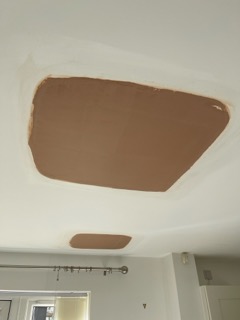
Water Damaged Ceiling Repair in Warwickshire – Can a Ceiling Be Repaired After a Leak?
There are few things more worrying for a homeowner than discovering a brown stain spreading across the ceiling or, even worse, seeing cracks appear after a leak. Whether the cause is a burst pipe, a leaking shower, damaged roof tiles or an overflowing water tank, water can quickly weaken plaster and leave your ceiling looking unsightly—or even unsafe.
At Cooper Plastering, we specialise in repairing water-damaged ceilings throughout Stratford-upon-Avon, Warwick, Leamington Spa, Kenilworth, Wellesbourne, Kineton, Alcester, Henley-in-Arden and the surrounding Warwickshire villages. Over the years, we’ve restored hundreds of ceilings following leaks, from small patch repairs to complete ceiling replacements and reboarding.
One of the questions we’re asked most often is:
“Can my ceiling be repaired, or does it need replacing?”
The answer depends on the extent of the damage, how long the leak has been present, and whether the plaster has lost its strength. In this guide, we’ll explain exactly how we assess a damaged ceiling, the repair options available, typical costs, and how to avoid costly mistakes.
Why Does Water Damage a Ceiling?
Many homeowners assume that once the leak has stopped, the ceiling will simply dry out and everything will be fine. Unfortunately, plaster doesn’t always recover that way.
Traditional plaster is incredibly durable when dry, but prolonged exposure to moisture can cause it to soften, lose adhesion and eventually separate from the plasterboard or ceiling laths beneath.
The longer the water remains trapped inside the ceiling, the greater the chance of permanent damage.
Common causes include:
- Burst water pipes
- Leaking central heating systems
- Shower tray leaks
- Overflowing baths
- Faulty washing machine hoses
- Roof tile failures
- Damaged flashing around chimneys
- Blocked gutters
- Loft tank leaks
- Condensation in poorly ventilated bathrooms
We’ve repaired ceilings affected by every one of these problems across Warwickshire, and while the causes differ, the repair process follows the same careful approach.
The First Thing You Should Do
If you’ve noticed water damage, don’t call a plasterer first.
The priority is always to stop the source of the leak.
There’s little point repairing a ceiling if water is still entering the property.
Once the leak has been fixed, allow the affected area to begin drying before arranging repairs.
If the ceiling has started sagging, bowing or pieces are becoming loose, avoid standing directly underneath it. Saturated plaster can become surprisingly heavy, and in severe cases sections may detach without warning.
Can Every Water-Damaged Ceiling Be Repaired?
The good news is that many ceilings can be successfully repaired, but not all.
At Cooper Plastering we inspect several factors before recommending the best solution.
Cosmetic staining only
If the ceiling has simply discoloured but the plaster remains solid, the repair may only involve stain-blocking after the area has fully dried.
Hairline cracking
Small cracks often develop as damp plaster dries and contracts.
Provided the surrounding plaster is still sound, these areas can usually be reinforced, repaired and skimmed.
Localised plaster failure
Sometimes only one section has softened.
In these cases we remove the damaged material, replace the affected plasterboard if necessary, and blend the repair seamlessly into the surrounding ceiling before applying a fresh skim.
Widespread damage
If the ceiling has become soft across a large area, or if it has started sagging, overboarding or complete replacement is often the safest and most economical option.
Many homeowners are surprised when we recommend overboarding rather than attempting lots of small repairs.
In reality, overboarding often produces:
- A perfectly flat finish
- Greater long-term strength
- Faster installation
- Better value for money
- Less risk of future cracking
Should You Patch Repair or Replace the Whole Ceiling?
This is probably the biggest decision homeowners face.
A small repair might appear cheaper initially, but it isn’t always the best long-term solution.
Imagine a ceiling that’s twenty years old.
If one section has failed because of water damage, other parts may already have weakened over time.
Trying to patch isolated areas can sometimes leave slight undulations that become noticeable once painted, particularly in rooms with large windows where sunlight highlights every imperfection.
In many homes throughout Stratford-upon-Avon and Warwick, we’ve found that overboarding and skimming the complete ceiling actually provides the better finish and often proves more cost-effective over the life of the property.
What Happens During a Professional Ceiling Repair?
Every project begins with protecting your home.
We carefully cover floors, furniture and surrounding areas before any work begins.
Next we inspect the existing ceiling for movement, loose plaster and hidden damage.
Depending on our findings we may:
- Remove loose plaster
- Cut out damaged plasterboard
- Replace sections of ceiling board
- Install new plasterboard over the existing ceiling
- Reinforce joints with scrim tape
- Apply bonding where required
- Finish with two coats of high-quality finishing plaster for a perfectly smooth surface
Throughout the process we aim to keep disruption to an absolute minimum, leaving the room clean, tidy and ready for decoration once the plaster has fully dried.
Coming up in Part 2
In the next section we’ll cover:
- How long ceilings need to dry after a leak
- Insurance claims and whether they’re worth making
- Typical repair costs across Warwickshire
- How long repairs take
- Common mistakes homeowners make
- Whether you can repair a textured or Artex ceiling after water damage
- Real examples from Cooper Plastering projects across Warwickshire
- Frequently asked questions